Leeds United isn’t just a football club—it’s a legacy carved in passion, grit, and unforgettable moments. From glory days to fierce comebacks, their journey is nothing short of epic.
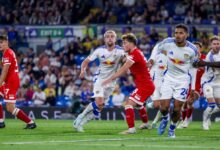
Leeds United: A Historical Powerhouse

Founded in 1919, Leeds United has grown into one of England’s most storied football institutions. Their rise from regional competition to national prominence reflects a relentless pursuit of excellence and a deep-rooted connection with their fanbase. The club’s early years laid the foundation for a culture of discipline, tactical intelligence, and fierce competitiveness.
The Founding and Early Years
Leeds United was established after the dissolution of Leeds City, a club expelled due to financial irregularities during World War I. The Football League granted the city a new franchise, and in October 1919, Leeds United was officially born. The club began in the Football League Second Division and quickly showed promise.
- First match: October 26, 1919, against Port Vale at Elland Road.
- First promotion: Achieved in 1924 under manager Arthur Fairclough.
- Early struggles: Relegated back to the Second Division in 1926, beginning a cycle of ups and downs.
Despite inconsistent results, the club built a loyal following and established Elland Road as a fortress. The 1930s saw Leeds reach the First Division again, but World War II interrupted competitive football, delaying further progress.
The Don Revie Era: Building a Dynasty
The true transformation of Leeds United began in 1961 when Don Revie took over as manager. Initially a player-manager, Revie shifted focus to youth development, tactical discipline, and physical conditioning. His philosophy emphasized teamwork, pressing, and relentless work rate—hallmarks of the Leeds identity.
Under Revie, Leeds United won two First Division titles (1968–69, 1973–74), one FA Cup (1972), one League Cup (1968), and two Inter-Cities Fairs Cups (1968, 1971). These achievements cemented their status as a dominant force in English and European football.
“We weren’t the Dirty Leeds people made us out to be. We were disciplined, committed, and built to win.” — Billy Bremner, Leeds United captain
The Revie era also introduced legendary players like Jack Charlton, Norman Hunter, Paul Reaney, and Eddie Gray. Their aggressive, high-intensity style earned both admiration and criticism, but there was no denying their effectiveness.
Leeds United’s Golden Era: Triumphs and Controversies
The late 1960s and early 1970s marked the peak of Leeds United’s dominance. They weren’t just winning—they were redefining how football was played in England. Their blend of physicality, tactical intelligence, and flair made them a nightmare for opponents.
First Division Dominance (1969 & 1974)
Leeds United’s first league title in 1968–69 was a masterclass in consistency. They finished four points ahead of Liverpool, winning 27 of their 42 matches. The team conceded only 39 goals, the best defensive record in the league.
The 1973–74 title win was even more dramatic. After a fierce battle with Liverpool, Leeds clinched the championship on the final day with a 2–1 victory over Coventry City. This triumph was especially sweet, as it came after years of near-misses and heartbreaking European final losses.
- 1968–69: 68 points, +48 goal difference.
- 1973–74: 66 points, +42 goal difference.
- Key players: Billy Bremner (midfield engine), Johnny Giles (playmaker), Peter Lorimer (long-range shooter).
Despite their success, Leeds United faced criticism for their physical style. Opponents and media often labeled them “Dirty Leeds,” a tag that stuck despite their clean disciplinary records in many seasons.
European Adventures and Near Misses
Leeds United’s European campaigns were both thrilling and heartbreaking. They reached the European Cup final in 1975, only to lose 2–0 to Bayern Munich at Hampden Park. The match was marred by controversial refereeing decisions, including a disallowed goal by Allan Clarke.
Prior to that, they won the Inter-Cities Fairs Cup twice—first in 1968 against Ferencváros, and again in 1971 against Juventus. The 1971 final was particularly iconic, with Leeds winning 1–0 at Elland Road in front of a roaring home crowd.
They also reached the semi-finals of the UEFA Cup in 1973 and the Cup Winners’ Cup in 1973, showcasing their ability to compete across multiple competitions. However, the 1975 European Cup final remains a painful “what if” moment in club history.
The Decline and Rebuilding Years
After Don Revie’s departure in 1974 to manage the England national team, Leeds United entered a period of decline. The club struggled to maintain its identity and competitive edge, leading to a long stretch of instability.
Post-Revie Management Struggles
Brian Clough’s brief and infamous 44-day tenure as manager in 1974 symbolized the beginning of the club’s downward spiral. Clough, known for his outspoken nature, clashed with players and staff, criticizing the legacy of Revie’s regime. His attempt to dismantle the existing culture backfired, and he was sacked before the season ended.
Successive managers failed to restore consistency. Leeds were relegated from the First Division in 1982, marking the end of an era. The 1980s saw the club bounce between divisions, plagued by poor ownership decisions and lack of investment.
- 1982: First relegation from the top flight.
- 1987: Relegated to the Third Division for the first time in club history.
- 1988: Promoted back under manager Howard Wilkinson.
Wilkinson’s arrival signaled a return to stability. He focused on youth development and tactical discipline, laying the groundwork for a revival.
The Wilkinson Redemption and 1992 Title
Howard Wilkinson’s leadership culminated in Leeds United winning the First Division title in 1991–92—the last season before the formation of the Premier League. This achievement was monumental, ending a 18-year league title drought.
The team, built around young talents like Lee Chapman, Gary McAllister, and Gordon Strachan, combined experience with energy. Chapman scored 21 league goals, while McAllister provided creativity and leadership from midfield.
Leeds secured the title with a 3–2 win over Wimbledon on April 26, 1992. The victory was a testament to Wilkinson’s long-term planning and commitment to sustainable success.
“We didn’t just win the league—we earned it through hard work and belief.” — Howard Wilkinson
Despite this triumph, financial constraints and player sales weakened the squad. When the Premier League launched in 1992–93, Leeds struggled to compete, eventually being relegated in 1996.
Leeds United in the Premier League Era
The transition to the Premier League era brought new challenges. The influx of television money and global commercialization favored clubs with deeper pockets. Leeds United, despite early promise, found themselves caught in a cycle of ambition and financial overreach.
The David O’Leary Renaissance
At the turn of the millennium, under manager David O’Leary, Leeds United experienced a brief but dazzling resurgence. O’Leary, a former Arsenal and Leeds player, instilled confidence and attacking flair in a young squad.
The 1999–2000 season saw Leeds finish third in the Premier League, qualifying for the UEFA Champions League. The following season, they reached the Champions League semi-finals, defeating giants like Lazio and AC Milan along the way.
- Key players: Harry Kewell, Mark Viduka, Alan Smith, Ian Harte.
- Champions League run: Lost to Valencia on aggregate in the semi-finals.
- Financial cost: The success came at a high price, with heavy spending on transfers and wages.
Despite the on-pitch success, the club’s financial model was unsustainable. The failure to qualify for the Champions League in 2002 led to a cash crisis, forcing the sale of star players.
Financial Collapse and Relegation
The early 2000s marked one of the darkest chapters in Leeds United’s history. After failing to qualify for European competition, the club faced mounting debts exceeding £100 million. Owner Peter Ridsdale’s “bet on the future” strategy—borrowing against anticipated Premier League and Champions League revenues—backfired spectacularly.
Star players like Rio Ferdinand, Jonathan Woodgate, and Robbie Keane were sold to cover debts. The weakened squad was relegated from the Premier League in 2004, beginning a long exile from the top flight.
The financial turmoil led to administration in 2007, resulting in a 10-point deduction and relegation to League One—the third tier of English football. It was the first time in the club’s history they played outside the top two divisions.
The Road Back: Promotion and Premier League Return
After years of struggle, Leeds United began a slow but determined climb back to the top. Under new ownership and management, the club rebuilt its identity and infrastructure.
Massimo Cellino’s Controversial Ownership
In 2014, Italian businessman Massimo Cellino purchased the club. His tenure was marked by instability—eight managers in four years—but also by crucial investments in the academy and Elland Road’s redevelopment.
Despite frequent managerial changes, Cellino’s ownership laid the groundwork for future success. He appointed capable executives and supported the appointment of Marcelo Bielsa in 2018—a decision that would change the club’s trajectory.
- Managers under Cellino: Neil Redfearn, Steve Evans, Garry Monk, Paul Heckingbottom.
- Key move: Hiring Marcelo Bielsa as head coach in June 2018.
- Legacy: Restored financial stability and competitive ambition.
Marcelo Bielsa and the 2020 Promotion
Marcelo Bielsa, the Argentine tactical genius, transformed Leeds United with his high-pressing, attacking philosophy. Known as “El Loco,” Bielsa demanded extreme fitness, discipline, and commitment from his players.
In his first season (2018–19), Leeds narrowly missed promotion, losing in the playoff semi-finals to Derby County. But in 2019–20, they dominated the Championship, finishing first with 93 points and securing automatic promotion to the Premier League.
The promotion ended a 16-year absence from the top flight. Fans celebrated at Elland Road, with flares, chants, and emotional tributes to Bielsa, who had rekindled the club’s fighting spirit.
“When I arrived, I saw a club with history, passion, and potential. I believed we could rise again.” — Marcelo Bielsa
Bielsa’s impact went beyond tactics—he restored pride, identity, and a winning culture. Players like Kalvin Phillips, Patrick Bamford, and Stuart Dallas became symbols of the new Leeds era.
Leeds United in the Modern Era: Challenges and Identity
Since returning to the Premier League, Leeds United has faced the challenge of survival in a highly competitive environment. The club’s aggressive style under Bielsa made them fan favorites but also exposed defensive vulnerabilities.
Survival and Managerial Changes
Leeds successfully avoided relegation in their first two seasons back (2020–21, 2021–22), finishing 9th and 17th respectively. However, the 2022–23 season was disastrous. A managerial change mid-season—from Bielsa to Jesse Marsch to interim manager Sam Allardyce—failed to stop the slide.
They were relegated in 38th matchday after a 4–1 loss to Tottenham. The fall was painful, but the club quickly regrouped under new head coach Daniel Farke, who led them to a strong Championship campaign in 2023–24.
- 2020–21: 9th place, +1 goal difference.
- 2021–22: 17th place, survived on final day.
- 2022–23: 19th place, relegated with 31 points.
The relegation sparked debates about squad depth, recruitment, and long-term strategy. However, the club’s ownership, now led by Andrea Radrizzani and later 49ers Enterprises, remained committed to sustainable growth.
Elland Road: The Heart of Leeds United
Elland Road is more than a stadium—it’s the soul of Leeds United. Opened in 1897, it has hosted countless historic moments and remains one of the most atmospheric grounds in England.
With a capacity of over 37,000, Elland Road is known for its passionate supporters, particularly in the South Stand and the Kop. The roar of the crowd during key matches has often inspired comebacks and stunned top teams.
The club has invested in modernizing facilities while preserving the stadium’s heritage. Recent upgrades include improved seating, hospitality areas, and digital infrastructure to enhance the fan experience.
Leeds United’s Rivalries and Cultural Impact
Rivalries define football, and Leeds United has several intense ones. These clashes are more than games—they’re battles for pride, history, and regional supremacy.
Yorkshire Derby: Leeds vs. Sheffield United
The rivalry with Sheffield United is one of the fiercest in English football. Known as the Yorkshire derby, it dates back to the early 20th century and is fueled by geographic proximity and historical competition.
Matches are often physical and emotionally charged. The rivalry intensified in the 1960s and 1970s when both clubs competed for league titles and European spots.
- Last competitive meeting: 2023 Championship playoff semi-final (Sheffield United won).
- Head-to-head: Over 130 meetings across all competitions.
- Cultural significance: Represents the North-South divide within Yorkshire.
Other Key Rivalries
Leeds also shares strong rivalries with Manchester United, due to competitive clashes in the 1960s and 1970s, and with Chelsea, stemming from the 1970 FA Cup final. The fixture against Millwall is another heated encounter, rooted in a 1970s hooliganism era.
Culturally, Leeds United has influenced music, fashion, and media. The club’s association with the “Casino” era in the 1990s and its presence in films like *The Damned United* (2009) have cemented its place in popular culture.
What is Leeds United’s most significant achievement?
Leeds United’s most significant achievement is winning the First Division title in 1991–92 under Howard Wilkinson. It was their last league championship and came just before the Premier League era, making it a historic milestone.
Who is the greatest Leeds United player of all time?
While opinions vary, Billy Bremner is widely regarded as the greatest Leeds United player. A diminutive but fearless midfielder, he captained the club during its golden era and embodied the fighting spirit of Leeds.
Why did Leeds United get relegated in 2023?
Leeds United were relegated in 2023 due to a combination of poor form, defensive fragility, managerial instability, and squad imbalance. A mid-season change from Jesse Marsch to Sam Allardyce failed to reverse their decline.
Who owns Leeds United now?
As of 2024, Leeds United is majority-owned by 49ers Enterprises, the investment arm of the NFL’s San Francisco 49ers. They acquired a controlling stake in 2023, succeeding Andrea Radrizzani.
What is Marcelo Bielsa’s legacy at Leeds United?
Marcelo Bielsa’s legacy is transformative. He restored Leeds United’s identity, led them back to the Premier League, and inspired a generation of players and fans. His influence on modern football tactics is globally recognized.
Leeds United’s story is one of resilience, passion, and unwavering belief. From the glory days of Don Revie to the modern revival under Bielsa, the club has weathered triumphs and tragedies. Their journey reflects the soul of football—where history, emotion, and hope collide. As they aim for another Premier League return, one thing is certain: Leeds United will never stop fighting.
Further Reading:
