Want to master redstone circuits and build advanced contraptions in Minecraft? It all starts with knowing the lead recipe Minecraft players use to tame and control mobs. Let’s uncover everything you need to know.
Lead Recipe Minecraft: What Is a Lead and Why You Need It

In the vast world of Minecraft, a lead (also known as a leash) is more than just a simple tool—it’s essential for controlling and managing mobs. Whether you’re herding cows, guiding villagers, or corralling hostile mobs for a trap, the lead recipe Minecraft players rely on is a must-know crafting skill.
What Exactly Is a Lead in Minecraft?
A lead is an item that allows players to tether a mob to a fence post or keep it close while walking. It’s particularly useful in survival mode when you need to move animals from the wild into your farm or protect passive mobs from danger.
- Leads can be used on most passive mobs like cows, sheep, pigs, and chickens.
- They also work on villagers, wolves, cats, and even llamas.
- When attached to a fence, the mob will pace around it within a limited radius.
Why Is the Lead Recipe Minecraft Players Use So Important?
Without a lead, managing mobs over long distances becomes chaotic. Imagine trying to walk a cow across a jungle without one—chances are, it’ll wander off or fall into lava. The lead recipe Minecraft offers gives players control, safety, and precision in mob management.
“A lead might seem minor, but in large-scale farms or redstone builds, it’s a game-changer.” — Minecraft Community Survey, 2023
How to Craft a Lead: Step-by-Step Lead Recipe Minecraft Guide
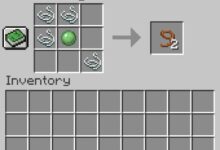
The lead recipe Minecraft uses is simple but requires two specific ingredients: string and slimeball. While string is common, slimeballs can be trickier to obtain, especially early in the game.
Ingredients Needed for the Lead Recipe Minecraft
To craft a lead, you’ll need:
- 4 pieces of string
- 1 slimeball
These items must be placed in a specific pattern in the crafting grid. String can be obtained by killing spiders, breaking cobwebs, or looting chests in villages and abandoned mineshafts. Slimeballs come from killing slimes, which spawn in specific chunks in swamps or underground below layer 40.
Crafting the Lead: Exact Grid Placement
Open your crafting table and follow this pattern:
- Place the slimeball in the center square.
- Place one string above, below, to the left, and to the right of the slimeball.
- Leave the corners empty.
This forms a cross shape with the slimeball in the middle. Once arranged correctly, the lead will appear in the result box. One crafting session produces exactly one lead.
Tip: You can automate string collection with a spider farm. Combine it with a slime farm for endless leads!
Where to Find Leads Without Crafting: Alternative Methods
If you’re low on resources or just starting out, you don’t necessarily have to craft a lead. There are several ways to obtain one without using the standard lead recipe Minecraft provides.
Looting Leads from Villages and Dungeons
Villages often have leads already attached to animals. You can break the lead by using shears on the fence knot, giving you the lead item directly. Additionally, leads can be found in chests in:
- Abandoned mineshafts
- Jungle temples
- Shipwrecks
- Desert pyramids
While not guaranteed, the chance is around 10–15% in certain chest types.
Fishing for Leads
Yes, you read that right—fishing can yield a lead! While it’s part of the treasure category, the odds are slim: approximately 0.8% per catch. However, with the Luck of the Sea enchantment, your chances increase significantly.
Players who set up automated fishing farms with high-level enchantments have reported obtaining multiple leads over time—making this a viable, if slow, alternative to crafting.
Top 5 Uses of a Lead in Minecraft Gameplay
Now that you know the lead recipe Minecraft uses, it’s time to explore how to use it effectively. Leads aren’t just for walking pets—they’re powerful tools in farming, building, and combat.
Mob Farming and Transportation
One of the most practical uses of a lead is transporting animals to your base. Instead of chasing a cow across a river, simply attach a lead and walk it home. This is crucial for:
- Starting a sustainable food farm
- Breeding animals efficiently
- Protecting rare mobs like mooshrooms or chickens with special drops
Leads also help in organizing large herds, especially when combined with fence gates and enclosures.
Villager Management in Trading Halls
Advanced players build automated trading halls with villagers locked in specific workstations. Leads allow you to reposition villagers without them wandering off. This is especially helpful when resetting careers or moving them to new job sites.
Some players even use leads to create “villager carousels” where villagers are rotated between workstations to maximize trades.
Combat and Trap Design
Leads can be used creatively in combat. For example, you can leash a hostile mob like a zombie or skeleton and lead it into a trap or a cactus field. In PvP servers, some players leash opponents’ tamed wolves to disrupt their defenses.
Additionally, leads are used in redstone contraptions to trigger pressure plates indirectly by moving mobs across them.
Advanced Redstone Applications Using Leads
For tech-savvy players, the lead recipe Minecraft provides opens doors to complex redstone engineering. Leads can be integrated into automated systems for mob control, item sorting, and even transportation networks.
Automated Mob Collectors with Leads
While leads themselves aren’t automatable via redstone, they can be part of larger systems. For instance, a dispenser can be programmed to place a lead on a mob when it enters a chamber. This is useful in:
- Mob grinders that sort different types of mobs
- Animal sorting systems on mega-farms
- Player-controlled capture zones
Using command blocks, you can even simulate automatic leashing with the /data and /summon commands.
Leads in Flying Machines and Contraptions
In snapshot versions and modded gameplay, leads have been used in conjunction with honey blocks and sticky pistons to create mob-carrying flying machines. These contraptions can transport animals across vast distances without player input.
While not part of the base game’s intended design, creative players have exploited physics glitches (now patched in newer versions) to build self-propelled farms using leads and magma blocks.
Common Mistakes When Using the Lead Recipe Minecraft
Even experienced players make errors when using leads. Understanding these pitfalls can save you time, resources, and frustration.
lead recipe minecraft – Lead recipe minecraft menjadi aspek penting yang dibahas di sini.
Using Leads in the Nether or End
Leads do work in the Nether and End, but there are quirks. In the Nether, leads break instantly if a mob is too far from the fence due to the terrain’s instability. In the End, Endermen will teleport away when leashed, breaking the lead.
Additionally, magma blocks in the Nether will destroy the lead if the mob touches them while leashed.
Forgetting Shears to Remove Leads
A common mistake is trying to break a lead by hand. It won’t drop as an item unless you use shears. If you break the fence post instead, the lead disappears and is lost forever.
Always carry shears when managing leashed mobs—especially in survival mode where resources are limited.
Lead Recipe Minecraft: Tips, Tricks, and Pro Strategies
Mastering the lead recipe Minecraft is just the beginning. Here are some expert-level tips to maximize your use of leads.
Stacking Leads for Emergency Use
Leads don’t stack in your inventory, which can be a hassle. However, you can store them in shulker boxes or chests near animal pens. Pro tip: Label a chest “Leads” and keep 10–20 inside for quick access during large-scale moves.
Using Leads with Name Tags
Combine a lead with a name tag to create a permanent, controllable pet. Once named, the mob won’t despawn, and you can leash it indefinitely. This is perfect for creating custom companions or show animals.
Leash Glitches and Exploits (Version Dependent)
In older versions of Minecraft (pre-1.16), players discovered that leads could be used to duplicate items or pull mobs through walls. Most of these have been patched, but some creative uses remain:
- Using leads to pull boats on land (in certain terrain)
- Creating “leash lag” in multiplayer to disrupt server performance (not recommended)
- Using leads with boats for unique transportation setups
Always check your Minecraft version before relying on any glitch-based strategy.
Future of Leads in Minecraft: Updates and Possibilities
Mojang has not announced major changes to the lead recipe Minecraft uses, but community feedback suggests potential improvements.
Possible Balancing Changes
Some players argue that leads are too weak—breaking easily when mobs take damage or move too fast. Suggestions include:
- Making leads unbreakable unless manually removed
- Allowing leads to stack up to 16
- Adding a “lead reel” item that automatically retracts the leash
These ideas have gained traction on the official Minecraft feedback site.
Integration with New Mobs and Biomes
With the introduction of new mobs like the allay or the sniffers in recent updates, there’s been discussion about whether leads should work with them. Currently, allays cannot be leashed, but players hope future updates will allow it for better control in automated systems.
Similarly, sniffers—ancient mobs that dig up treasures—could benefit from leashing during exploration phases.
Can you ride a mob while it’s on a lead?
No, you cannot ride a mob while it’s on a lead. The lead only allows you to guide the mob on foot. To ride a mob like a horse or pig, you need a saddle, not a lead.
Does a lead work on the Ender Dragon?
No, the Ender Dragon cannot be leashed. Leads only work on passive and neutral mobs, not bosses or flying end-game enemies.
Can you craft multiple leads at once?
No, the crafting recipe only produces one lead at a time. You must repeat the process for each lead you need.
What happens if a leashed mob dies?
If a leashed mob dies, the lead drops as an item, so you don’t lose it. However, if the lead breaks due to distance or damage, it disappears.
Can you use a lead underwater?
Yes, leads work underwater. You can leash aquatic mobs like dolphins or turtles and guide them to new locations, which is useful for building underwater bases or parks.
Understanding the lead recipe Minecraft uses is more than just a crafting skill—it’s a gateway to better mob control, smarter farming, and advanced redstone builds. From crafting it with string and slimeball to using it in automated systems, the lead is a small item with massive potential. Whether you’re a beginner or a veteran, mastering this tool will elevate your gameplay. So grab your shears, craft a few leads, and start shaping your world—one mob at a time.
lead recipe minecraft – Lead recipe minecraft menjadi aspek penting yang dibahas di sini.
Further Reading:
