Ever wondered why some marketing campaigns convert like crazy while others flop? The secret might not be in the message—but in the leads density. This often-overlooked metric can make or break your sales funnel.

What Is Leads Density and Why It Matters

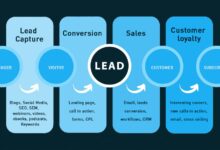
Leads density refers to the concentration of qualified prospects within a given audience segment or marketing channel. It’s not just about how many leads you generate, but how many of them are actually ready to buy. High leads density means more conversions with less effort.
Defining Leads Density in Modern Marketing
In today’s data-driven landscape, leads density is a strategic KPI. It measures the proportion of high-intent, qualified leads in your total lead pool. Think of it as the ‘quality-to-quantity ratio’ of your lead generation efforts.
- Leads density = (Number of qualified leads) / (Total number of leads)
- High density = more sales-ready prospects per campaign
- Low density = wasted ad spend and sales team frustration
According to HubSpot’s 2024 State of Sales Report, companies with high leads density close deals 3.2x faster than those with scattered, low-quality leads.
Why Leads Density Trumps Raw Lead Volume
Many marketers obsess over lead volume—how many names they can collect. But without density, volume is noise. A campaign generating 1,000 leads with only 50 qualified prospects has a leads density of just 5%. Meanwhile, a campaign with 300 leads and 90 qualified ones boasts a 30% density—three times more efficient.
“We shifted from chasing volume to optimizing for leads density. Our conversion rate jumped from 4% to 18% in six months.” — Sarah Lin, VP of Growth at TechFlow Inc.
This shift in focus allows businesses to allocate resources more effectively, reduce customer acquisition costs (CAC), and improve ROI across channels.
The Science Behind Leads Density Optimization
Optimizing leads density isn’t guesswork—it’s rooted in behavioral analytics, segmentation science, and predictive modeling. By understanding user intent and engagement patterns, marketers can fine-tune their strategies to attract higher-density audiences.
Behavioral Signals That Indicate High Leads Density
Not all leads behave the same. High-density leads exhibit specific behavioral patterns that signal purchase intent:
- Repeated website visits, especially to pricing or product demo pages
- Time spent on site exceeding industry benchmarks (e.g., >3 minutes)
- Engagement with high-intent content (e.g., case studies, ROI calculators)
- Form submissions with complete, professional information
- Click-throughs on targeted CTAs like ‘Schedule a Demo’ or ‘Talk to Sales’
Tools like Hotjar and Crazy Egg help visualize these behaviors, enabling marketers to identify and replicate high-density traffic sources.
Using Predictive Scoring to Boost Leads Density
Predictive lead scoring uses machine learning to assign likelihood-to-convert scores based on historical data. Platforms like Salesforce Marketing Cloud and Marketo analyze thousands of data points—job title, company size, content engagement, email opens—to predict which leads are most likely to convert.
By filtering out low-scoring leads early, teams can focus on nurturing high-density prospects. One B2B SaaS company reported a 47% increase in leads density after implementing predictive scoring.
How Leads Density Impacts Sales Funnel Efficiency
The sales funnel is only as strong as its weakest link. Low leads density creates bottlenecks at every stage—from initial contact to closing. High-density leads move faster, require less nurturing, and convert at higher rates.
Top-of-Funnel: Attracting the Right Audience
Leads density starts with targeting. Broad, untargeted campaigns attract low-intent users. Precision targeting—using firmographics, technographics, and intent data—increases the odds of attracting high-density leads.
- Use LinkedIn Ads with job title and industry filters
- Leverage intent data platforms like 6sense or Gombi to identify companies actively researching solutions
- Create niche content (e.g., ‘ERP for Mid-Sized Manufacturers’) to attract qualified buyers
A study by IDC found that companies using intent data saw a 2.8x improvement in leads density compared to those relying on demographics alone.
Middle-of-Funnel: Nurturing with Precision
Once leads enter the funnel, nurturing must be tailored to their intent level. High-density leads respond better to personalized, value-driven content rather than generic drip campaigns.
- Send case studies relevant to their industry
- Offer live product walkthroughs instead of static demos
- Use dynamic content that adapts based on lead behavior
According to CMO.com, personalized nurturing increases leads density by up to 35% by filtering out disengaged prospects early.
Bottom-of-Funnel: Accelerating Conversion
At the decision stage, high leads density means sales teams spend less time qualifying and more time closing. CRM integration with lead scoring ensures only the hottest leads are passed to sales.
- Set thresholds (e.g., score >80) for sales handoff
- Automate follow-ups for high-scoring leads
- Use chatbots to capture real-time intent signals
One financial services firm reduced its sales cycle by 22 days after optimizing for leads density at the bottom of the funnel.
Measuring and Tracking Leads Density Accurately
You can’t improve what you don’t measure. Tracking leads density requires clear definitions, consistent data collection, and the right analytics tools.
Key Metrics to Monitor Leads Density
To calculate and monitor leads density, track these core metrics:
- Qualified Lead Rate: % of leads meeting BANT (Budget, Authority, Need, Timeline) criteria
- Conversion Rate by Source: Which channels deliver the highest density?
- Lead-to-Customer Velocity: How quickly do leads convert?
- Cost Per Qualified Lead (CPQL): More accurate than cost per lead
Google Analytics 4 (GA4) and CRM dashboards can be configured to report these metrics in real time.
Tools for Real-Time Leads Density Analysis
Several platforms provide real-time insights into leads density:
- HubSpot: Tracks lead quality scores and source performance
- Pardot (by Salesforce): Offers engagement scoring and ROI reporting
- Drift: Uses conversational AI to qualify leads instantly
- Clearbit: Enriches lead data to improve segmentation and scoring
Integrating these tools ensures you’re not flying blind when optimizing for leads density.
Strategies to Increase Leads Density Across Channels
Boosting leads density isn’t a one-time fix—it’s an ongoing optimization process. The following strategies work across digital, social, and offline channels.
Content Marketing: Attracting High-Intent Buyers
Content is the foundation of lead generation. But not all content attracts equal-quality leads. High-density content includes:
- Product comparison guides
- ROI calculators
- Industry-specific webinars
- Free trials with onboarding support
A/B testing headlines and CTAs can further refine leads density. For example, changing a CTA from ‘Download Guide’ to ‘See How It Works for Your Business’ increased qualified leads by 62% in one trial (Optimizely).
Paid Advertising: Targeting for Quality, Not Just Clicks
PPC campaigns often prioritize clicks over conversions. To increase leads density, shift focus to conversion-optimized campaigns:
- Use long-tail keywords with high buyer intent (e.g., ‘best CRM for small law firms’)
- Exclude irrelevant search terms
- Implement audience exclusions (e.g., past customers, low-engagement users)
- Leverage Google’s Smart Bidding for conversion-focused optimization
One e-commerce brand reduced cost per acquisition by 40% while doubling leads density by refining keyword targeting and ad copy.
Email Campaigns: Segmenting for Higher Density
Email remains one of the highest ROI channels—but only if you segment properly. Sending the same message to everyone dilutes leads density.
- Segment by engagement level (e.g., opened last 3 emails)
- Use behavioral triggers (e.g., abandoned cart + viewed pricing page)
- Personalize subject lines and content based on job role or industry
According to Campaign Monitor, segmented campaigns generate 58% of all revenue, despite representing only 20% of emails sent.
Leads Density in B2B vs. B2C Markets
The concept of leads density applies to both B2B and B2C, but the execution differs significantly due to sales cycles, decision-making processes, and data availability.
B2B: Long Cycles, High Stakes, Need for Precision
In B2B, leads density is critical because sales cycles are longer and involve multiple stakeholders. A single unqualified lead can waste dozens of sales hours.
- Use account-based marketing (ABM) to target high-value companies
- Leverage intent data to identify active buyers
- Implement lead-to-account matching for better alignment
Forrester reports that B2B companies using ABM see a 3.5x higher leads density than those using traditional demand gen.
B2C: Volume vs. Velocity Trade-Off
B2C markets often prioritize volume, but high leads density still matters—especially in high-consideration categories like finance, education, or luxury goods.
- Use lookalike audiences to replicate high-value customer profiles
- Implement exit-intent popups with targeted offers
- Leverage SMS and push notifications for real-time engagement
A fitness app increased paid subscriber conversions by 70% by focusing on users who completed onboarding and engaged within 24 hours—proving that even in B2C, density drives results.
Common Mistakes That Destroy Leads Density
Even well-intentioned strategies can backfire if they compromise leads density. Avoid these common pitfalls:
Over-Reliance on Lead Magnets with Low Barriers
Offering free eBooks or checklists with minimal form fields attracts large volumes of low-intent leads. While this inflates top-of-funnel metrics, it dilutes leads density.
- Solution: Increase friction slightly (e.g., require company email, job title)
- Use progressive profiling to gather data over time
- Gate high-value content behind qualification steps
One tech firm increased leads density by 55% simply by switching from a one-field to a four-field form for premium content.
Poor Sales and Marketing Alignment
When sales and marketing teams don’t agree on what constitutes a ‘qualified lead,’ leads density suffers. Marketing may pass unvetted leads, while sales ignores them.
- Solution: Co-create a Service Level Agreement (SLA) with clear definitions
- Hold regular sync meetings to review lead quality
- Use shared dashboards for transparency
Companies with strong alignment report 36% higher leads density (MarketingProfs).
Ignoring Lead Source Performance
Not all channels are created equal. Continuing to invest in low-density sources (e.g., broad display ads) drains budget and skews overall performance.
- Solution: Conduct quarterly channel audits
- Pause or optimize underperforming campaigns
- Double down on high-density sources (e.g., webinars, referral programs)
One SaaS company discovered that 70% of its qualified leads came from just two sources—organic search and partner referrals—prompting a strategic reallocation of ad spend.
Future Trends Shaping Leads Density
As AI, privacy regulations, and buyer behavior evolve, so too will the strategies for maximizing leads density.
AI-Powered Lead Qualification
Artificial intelligence is revolutionizing how we identify high-density leads. AI chatbots can qualify leads in real time, while natural language processing analyzes email and chat content for intent signals.
- Tools like Exceed.ai automate lead qualification conversations
- AI scoring models update in real time based on new data
- Generative AI personalizes outreach at scale
Gartner predicts that by 2026, 60% of B2B companies will use AI-driven lead scoring, up from 22% in 2023.
Privacy-First Lead Generation
With cookie deprecation and GDPR/CCPA regulations, traditional tracking methods are fading. Marketers must find new ways to measure leads density without invasive data collection.
- Focus on first-party data collection
- Use zero-party data (e.g., preference centers, quizzes)
- Leverage contextual targeting over behavioral tracking
Apple’s App Tracking Transparency framework has already reduced retargeting accuracy by 40%, forcing brands to rely more on intent-based signals and direct engagement.
The Rise of Community-Driven Lead Density
Online communities—like Slack groups, forums, or user conferences—are becoming high-density lead sources. Members are already engaged, trust the brand, and are more likely to convert.
- Create exclusive communities for trial users
- Host live Q&A sessions with product experts
- Encourage peer-to-peer referrals
Notion and Figma have built thriving communities that generate over 30% of their high-intent leads—proving that engagement breeds density.
What is leads density?
Leads density is the percentage of qualified, sales-ready leads within your total lead pool. It measures the efficiency of your lead generation by focusing on quality over quantity.
How do you calculate leads density?
Divide the number of qualified leads by the total number of leads generated, then multiply by 100. For example: (150 qualified / 500 total) × 100 = 30% leads density.
Which tools help improve leads density?
CRM platforms (e.g., Salesforce), marketing automation (e.g., HubSpot), intent data providers (e.g., 6sense), and AI chatbots (e.g., Drift) all help identify and nurture high-density leads.
Can leads density be too high?
Rarely. However, overly strict qualification criteria may exclude potential buyers. Balance is key—optimize for quality without sacrificing growth.
Does leads density affect customer lifetime value (LTV)?
Yes. High-density leads are more likely to become long-term customers. One study found a 25% higher LTV among customers acquired through high-density channels.
Leads density isn’t just a metric—it’s a mindset. By shifting focus from raw volume to qualified concentration, businesses unlock faster conversions, lower costs, and stronger sales alignment. From AI-powered scoring to community-driven growth, the future of lead generation is dense, not diffuse. Start measuring, optimizing, and scaling with precision. The highest-performing funnels aren’t the widest—they’re the densest.
Further Reading:
